The Homeowner’s Diagnostic Hub
Professional Valuations & Technical Guides for Chambersburg’s Roofs, Siding, and Windows.
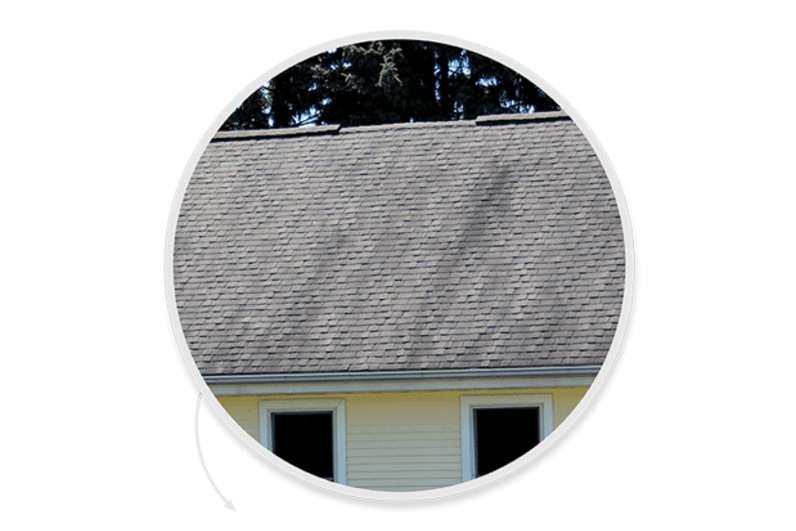
1. Biological Growth: Algae, Lichens, and Moss
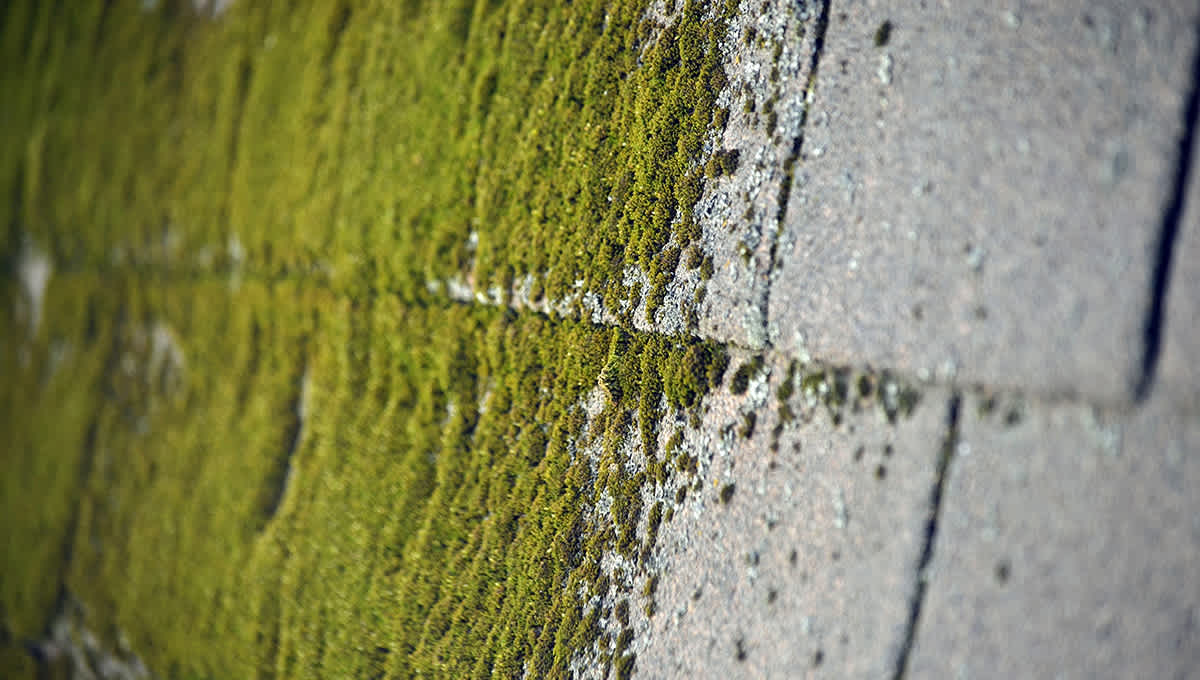
The Reality: Those "little white spots" are Lichens. They are a combination of algae and fungi that root themselves into the shingle's limestone filler. Unlike simple dirt, these organisms are literally "eating" your roof's protective layer.
- The Warning: Lichens and Moss are particularly dangerous because they hold moisture against the shingle for long periods, causing the shingle to rot and lose its wind resistance. Once you see the white spots, the "roots" are already deep.
- The Technical Approach: We use high-resolution photography to distinguish between simple surface staining and deep-rooted biological growth. If the shingles are still structurally sound, we can recommend a path to preservation; if the growth has compromised the mat, we show you why replacement is the only way to stop the rot.
- Action: [Request a Biological Integrity Check]

2. Storm Damage: The Invisible Impact
The Reality: Storm damage is often a "silent killer." You might not see a leak today, but the integrity of the system has been reset to zero.
- Hail (Dents & Bruises): When hail hits, it creates a "bruise" by knocking the protective granules off. This exposes the raw asphalt to UV rays. Within months, that spot becomes brittle and cracks, leading to a leak that started a year prior.
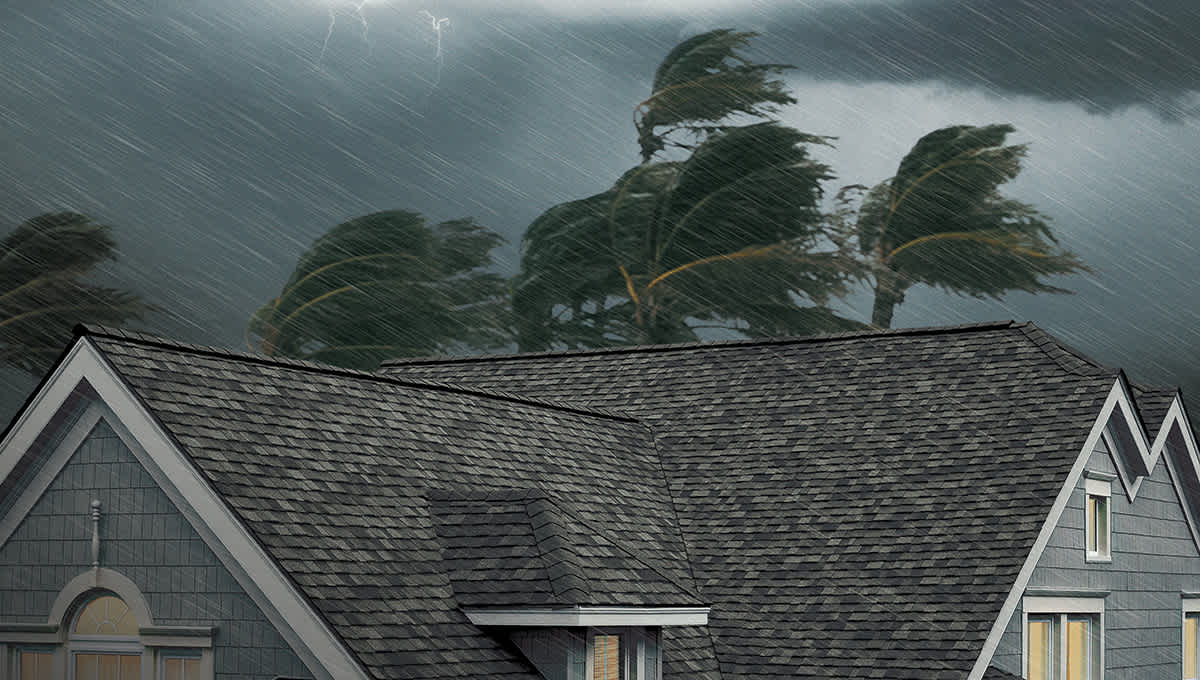
- Wind (Seal Failure & Creasing): High winds can lift a shingle just enough to "break the seal." Even if it lays back down, the adhesive is ruined. The next minor wind storm will flip that shingle up, or driving rain will be pushed under it.
- Curled & Bent Shingles: This is a sign that the shingles have lost their oils and are shrinking. Once a shingle curls, it acts like a sail, catching the wind and stressing the fasteners below.
- The Technical Approach: This is where our 4K Drone Imaging shines. We zoom in on the "granule loss patterns" and identify "creased" shingles from a bird's-eye view that a manual inspection might miss. We provide a full digital damage map for your records (and your insurance company).
- Action: [Request a Post-Storm Technical Valuation]
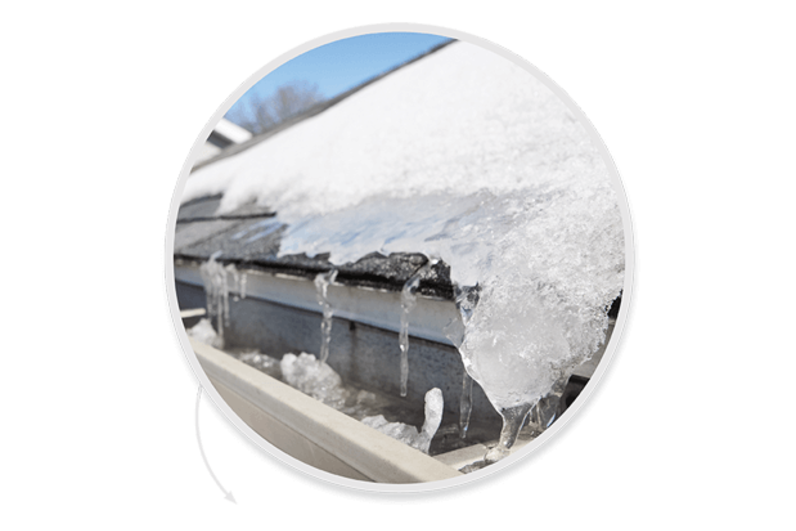
3. Ice Buildup: The Ventilation Red Flag
The Reality: Ice dams aren't a "roof" problem; they are a ventilation and insulation problem.
- The Warning: When heat escapes your attic, it melts the snow on the roof. That water then refreezes at the cold eaves, creating a dam that backs water up under your shingles and into your walls.
- The Technical Approach: We assess your "Thermal Envelope." By checking attic airflow and eave temperatures, we identify the root cause of the ice, ensuring that a new roof won't just face the same problem next winter.
- Action: [Request a Thermal & Ventilation Audit]
Asphalt Roofing: Life-Cycle & Health Assessment

1. The Chronological Limit: Understanding Roof Age
In the Cumberland Valley, the typical 30-year architectural shingle often begins its "failure phase" around year 18–22.
- The Valuation: We don't just look at a calendar. We evaluate the chemical integrity of the asphalt. Once the essential oils evaporate, the shingles become brittle and lose their ability to shed water or resist wind.
- The Technical Edge: Using high-resolution drone photography, we can spot "thermal cracking" and surface-level dehydration that isn't visible from the ground.
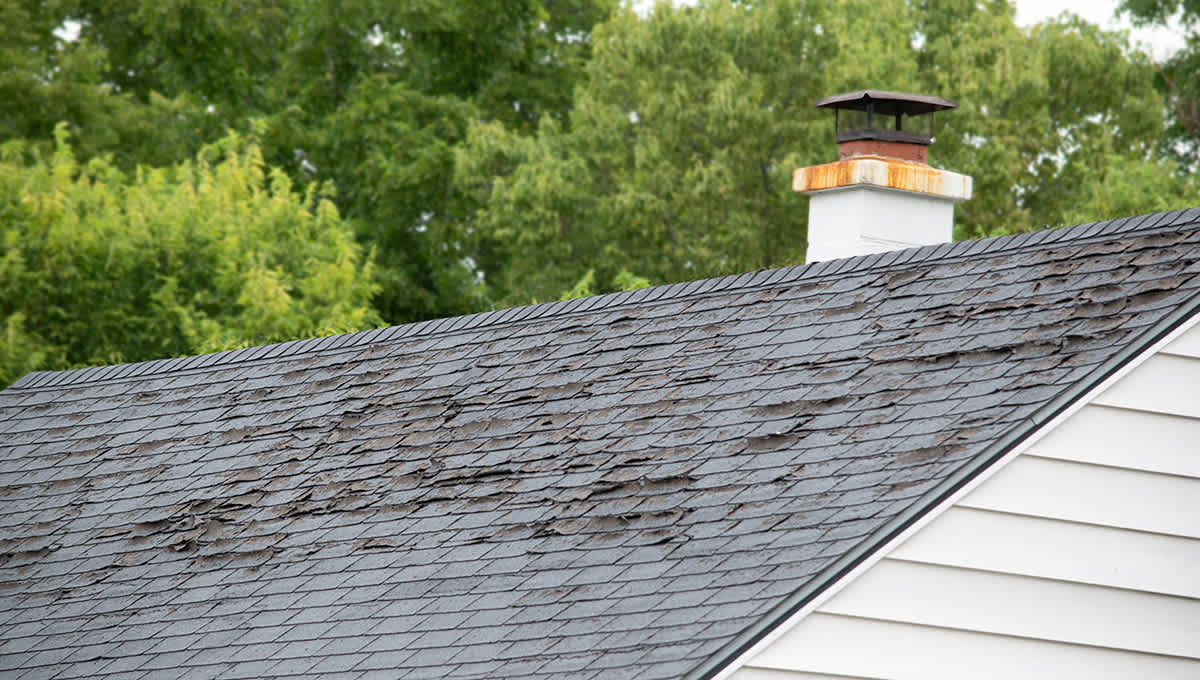
2. System Breaches: The True Cost of Leaks
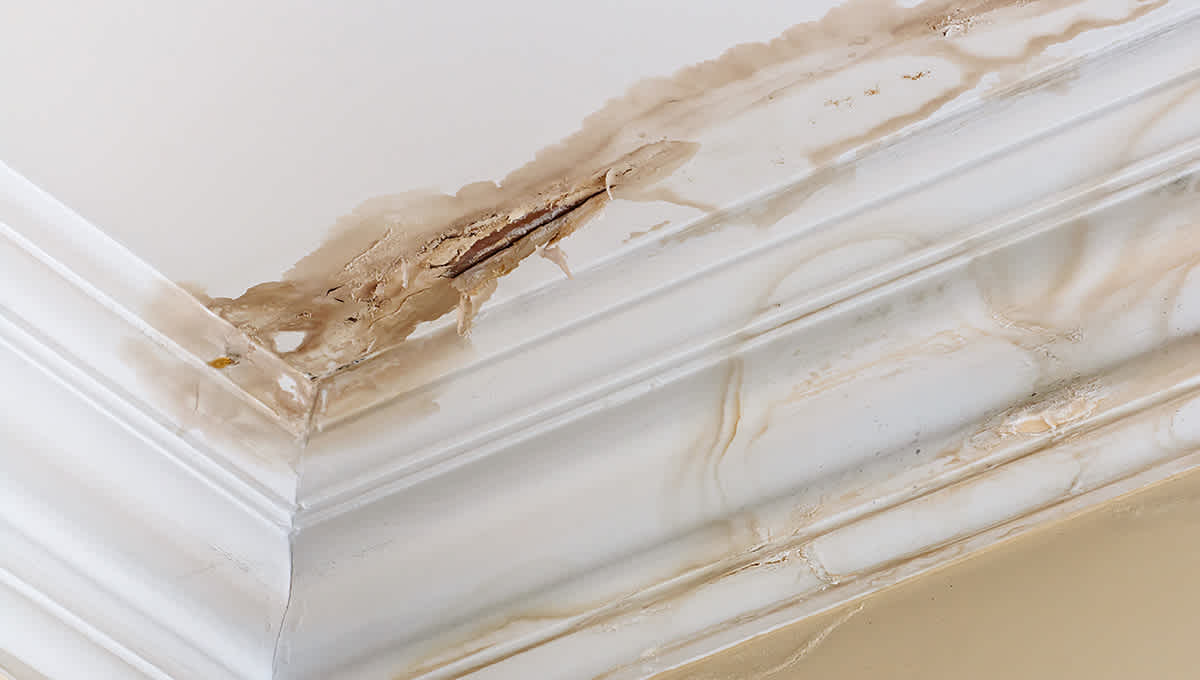
A water stain on your ceiling isn't the problem—it’s the final symptom. By the time you see a spot, the following damage has usually already occurred:
-
- Attic Insulation: Wet insulation loses its R-value immediately, spiking your energy bills.
- Structural Framing: Continuous moisture leads to "soft rot" in rafters and plywood sheathing, which can double the cost of a future roof replacement if the wood has to be torn out.
- Mold Growth: Dark, damp attics are breeding grounds for mold that affects your family’s air quality.
3. The "50% Economic Rule" of Repair vs. Replace
How do you decide between a patch and a new roof? We use a professional financial filter:
- The Rule: If a required repair costs more than 10% of a total replacement, or if the total of all required repairs across the roof exceeds 50% of the cost of a new system, replacement is the only logical investment.
- Aesthetic vs. Structural: "Aesthetic damage" (algae streaks) can often be managed. "Structural damage" (creased shingles, missing granules, or rusted flashing) requires immediate technical intervention.
4. When a Technical Repair is Sufficient
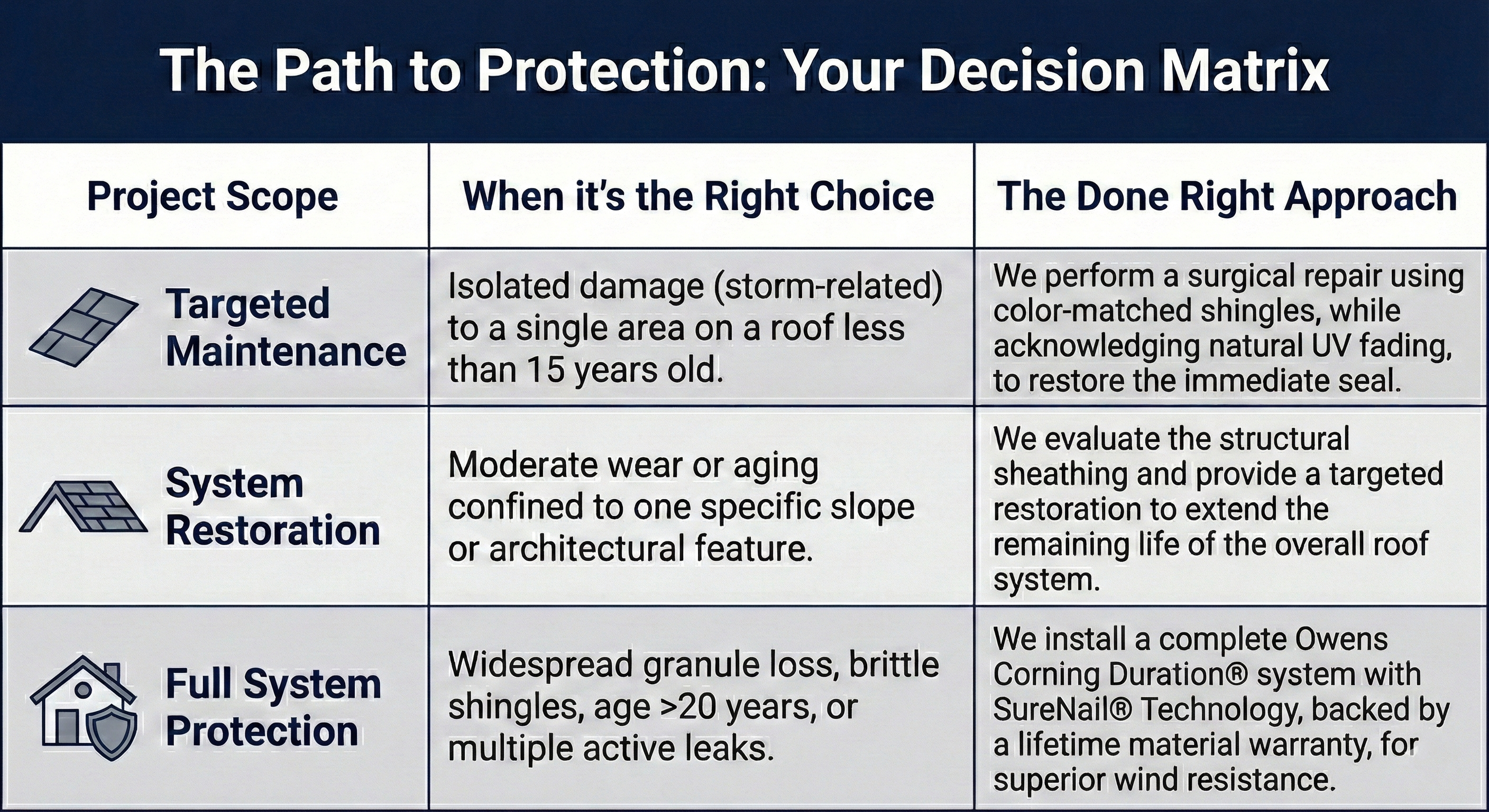
We aren't here to sell you a roof you don't need. A targeted repair is appropriate when:
- Damage is Isolated: A single tree limb or a freak wind gust affected one specific area (<5% of the total surface).
- System Health is High: The rest of the shingles are still flexible and have 75%+ granule retention.
- Matching: We source manufacturer-specific shingles to ensure your repair doesn't look like a "patch job," though we always account for natural UV fading.
5. The Case for a Full System Replacement
When our assessment shows widespread failure, we recommend a total replacement using the Owens Corning Duration® Series. This isn't just "putting on shingles"; it is installing a high-performance shield.
- Curb Appeal: A new roof is the fastest way to increase home value.
- SureNail® Technology: We use shingles with a fabric-reinforced nailing zone, ensuring your new roof stays put in the high winds we see in Greencastle and Chambersburg.
- Energy Savings: Modern "Cool Roof" technology reflects solar heat, keeping your attic cooler and your AC bills lower.
III. Metal Systems: Durability & Performance Valuation
1. The "Hidden Leak" Diagnostic: Fasteners& Seals

A corrugated metal roof is only as good as the hardware holding it down. In the Cumberland Valley, extreme temperature swings cause metal panels to expand and contract daily.
- The Warning: Over time, this movement causes "fastener back-out." The rubber gaskets under your screws can dry-rot and crack, creating thousands of tiny entry points for water that you can't see from the ground.
- The Technical Approach: We perform a Fastener Integrity Check. We don't just look for rust; we check the torque and seal of your hardware. Often, a professional Hardware Restoration can save a metal roof from needing a full replacement.
- Action: [Request a Metal Hardware Audit]
2. Partial Restoration vs. Full Replacement
If damage is confined—such as a fallen branch or an isolated rust patch—a partial replacement can be a surgical, cost-effective fix.
- The "Weathering Gap": It is important to note that factory-finished metal panels undergo natural UV fading. While we source the exact manufacturer and color code for your repair, a slight "shimmer" difference between the new and old panels is common.
- The Valuation: If rust has moved from the surface to the "lap seams" or the underside of the panels, the structural integrity of the system is compromised. At this point, we recommend a full-scale replacement to protect your home’s decking.
3. The High-Performance Advantage of New Metal
When a total replacement is the right call, a modern corrugated or standing seam system offers the highest Return on Investment(ROI) in the industry.
- 40-70 Year Lifespan: With professional installation and high-grade fasteners, this is likely the last roof you will ever buy.
- Thermal Reflectivity: Metal roofing reflects solar heat rather than absorbing it. Homeowners in Chambersburg often see a 10-25% reduction in cooling costs during our humid PA summers.
- Weather Resistance: Our systems are rated for high-velocity winds and offer superior shedding for heavy snow loads, preventing the "ice damming" common with asphalt shingles.
IV. Siding & Trim: Envelope Protection & Efficiency
1. The "Protective Envelope": More Than Just Curb Appeal
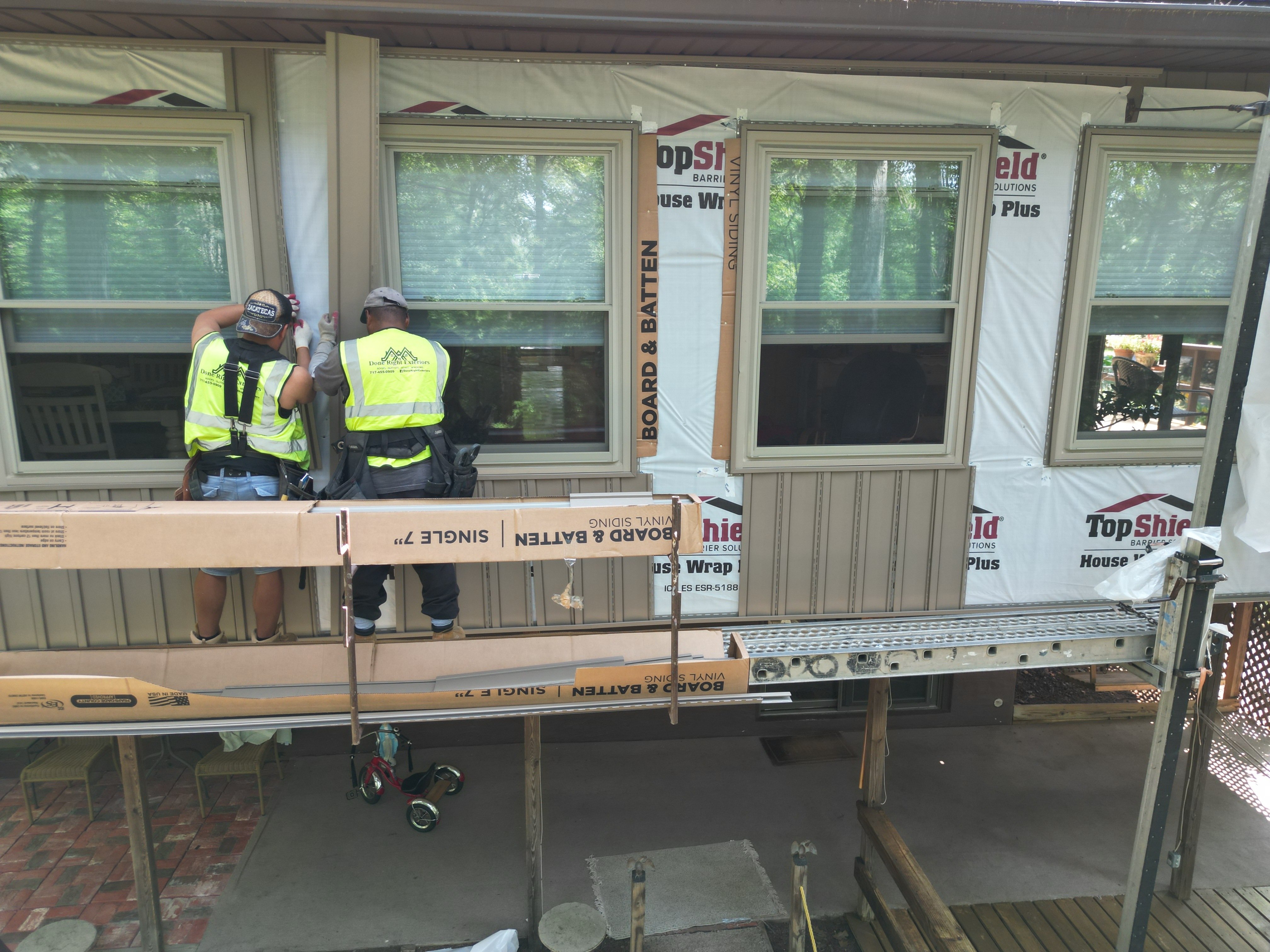
Your siding is the "raincoat" for your home’s structural frame. When siding fails, the damage isn't just surface-level; it begins to compromise the OSB sheathing and the 2x4 studs beneath.
- The Warning: Look for "spongy" spots near the foundation, warped panels, or mysterious mold growth on your interior drywall. These are signs that your siding has "lost its seal," allowing water to bypass the vapor barrier.
- The Technical Approach: We don't just look for cracks. We perform a Moisture-Migration Assessment. Using thermal sensors, we can identify "cold spots" where your home is losing heat and detect moisture trapped behind the panels before it turns into rot.
- Action: [Request a Siding Performance Audit]
2. Surgical Repairs: Restoring the Barrier
If your siding has isolated damage from a storm or a rogue lawnmower, a targeted repair can prevent a massive headache later.
- The Integrity Check: A hole in a single panel is an open invitation for pests and moisture. We focus on Surgical Restoration—replacing damaged sections while ensuring the underlying house-wrap is still intact.
- The Matching Reality: We utilize manufacturer databases to find the closest match for your existing profile. However, it’s important to account for natural UV fading; a new panel will always have a slightly richer pigment than one that has weathered for a decade.
- Action: [Schedule a Damage Assessment]
3. Full System Replacement: The Lifetime Upgrade
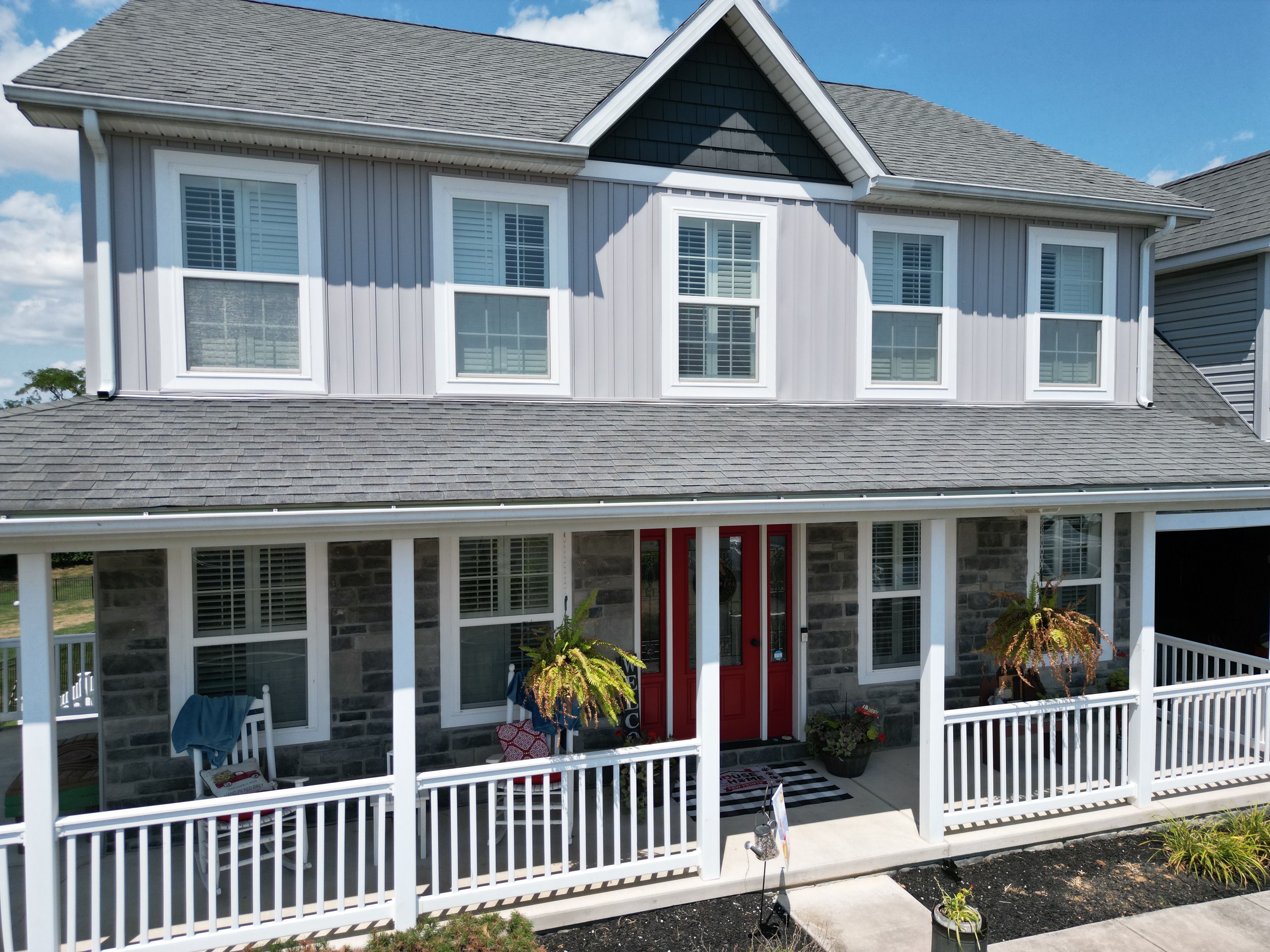
When siding becomes brittle or widespread warping occurs, a total system replacement is the only way to restore your home’s R-value (insulation power).
- Premium Materials: We specialize in Ply Gem Mastic systems, designed to withstand high-velocity winds and resist the fading common in budget-grade vinyl.
- Energy Efficiency: Modern siding systems act as a thermal blanket. By eliminating "thermal bridging," our installations help keep your home cooler in the summer and warmer in the winter, significantly lowering your monthly utility costs.
- Warranties You Can Trust: While material manufacturers offer lifetime product warranties, Done Right Exteriors backs every full replacement with our extensive workmanship warranty. We don't just install a product; we stand behind the craft.
4. Visualize Your Transformation
Don't guess how your home will look. Use our Interactive Siding Visualizer to test different profiles and colors on a 3D model of your home. From classic lap siding to modern board-and-batten, see the "Done Right" difference before the first nail is driven.
- Action: [Launch the Siding Visualizer]
V. Windows & Openings: Thermal Seals & Energy Mapping
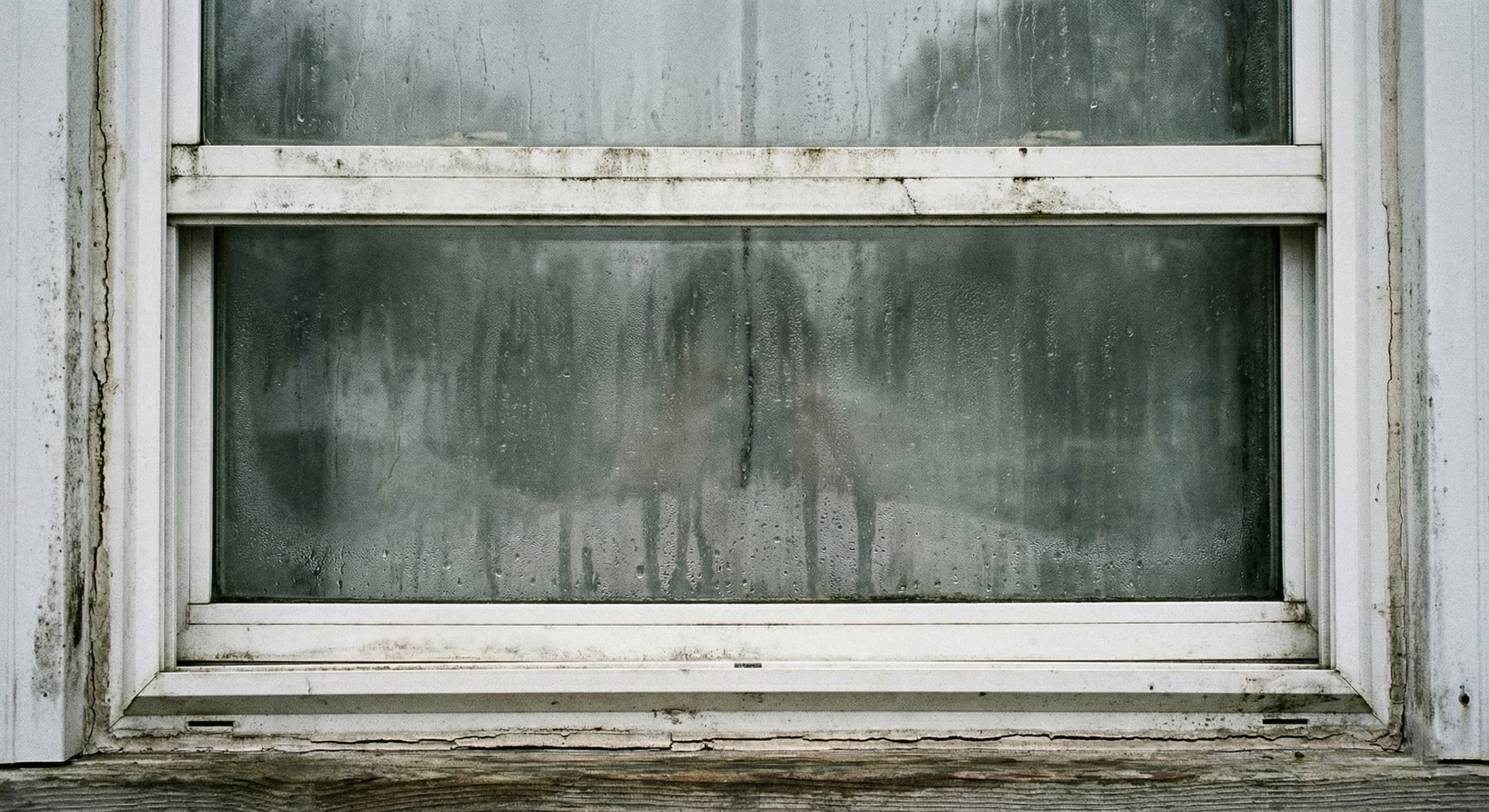
1. The "Fog" Factor: Understanding Seal Failure
The most common sign of window death is subtle. If you see condensation or a "milky" haze between the two panes of glass that you cannot wipe off from the inside or outside, the window has failed.
- The Technical Reality: Double and triple-pane windows are filled with an inert gas (usually Argon) that acts as an insulator. Once the seal breaks and that gas escapes, the window provides almost zero thermal protection. You are essentially looking through expensive holes in your walls.
- The Valuation: We don't guess. We check the Inter-pane Glazing Unit (IGU) for seal integrity. Once a seal is blown, the only true fix is replacing the glass unit or the entire window.
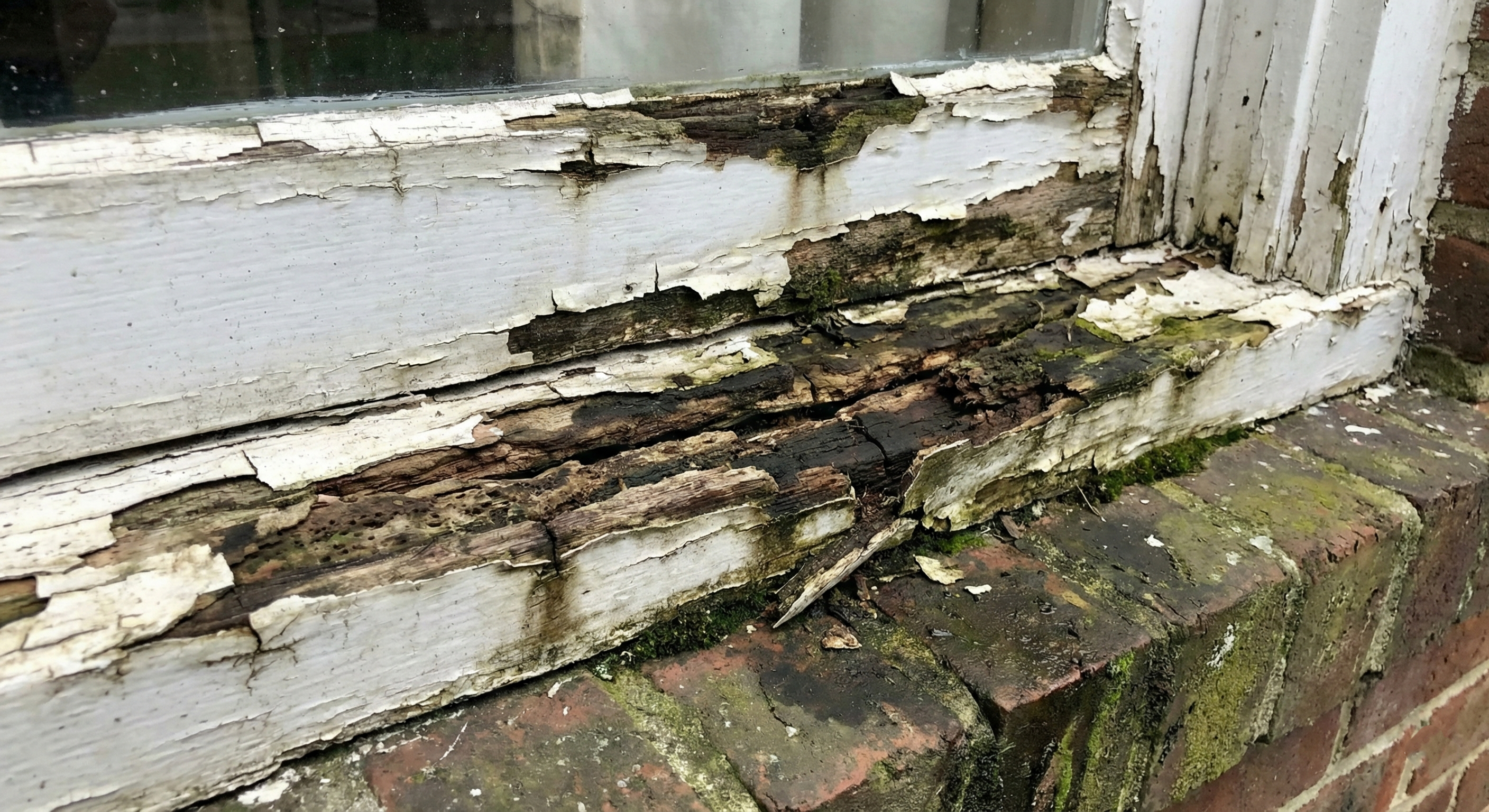
2. Mechanical & Structural Fatigue
A window is a moving part. Over decades of Pennsylvania seasons, materials warp and degrade.
- Wood Rot: We use non-invasive moisture meters to check wooden frames and sills for "soft rot." If the frame is spongy, it is no longer structurally sound, and a simple glass replacement won't solve the underlying moisture intrusion issue.
- Vinyl Warping: Lower-grade vinyl windows can warp in high heat, breaking the weatherstripping seal. If your window is difficult to lock or feels drafty even when closed, the sash has likely deformed.
3. The "Done Right" Energy Mapping Advantage
You can't fix what you can't see. That’s why our technical valuation relies on data, not just a visual inspection.
- Thermal Imaging Technology: We utilize thermal cameras during our assessments to create an Energy Map of your openings. We show you exactly where the cold air is infiltrating (blue zones on the camera) and where your expensive heat is escaping (red/orange zones).
- The Data-Driven Decision: Seeing a thermal image of a drafty window changes the conversation from "Do I want new windows?" to "Can I afford to keep paying to heat the neighborhood?"
4. When to Repair vs. When to Upgrade
- Surgical Repair: We recommend repairs for mechanical issues on otherwise healthy windows—broken cranks, stuck latches, or torn screens.
- Thermal Upgrade: We recommend replacement when there is seal failure (fog), frame rot, or significant thermal loss detected on our energy map. We install high-efficiency units designed specifically for our climate zone, ensuring maximum ROI on your energy bills.
- Action: [Request a Thermal Performance Audit]